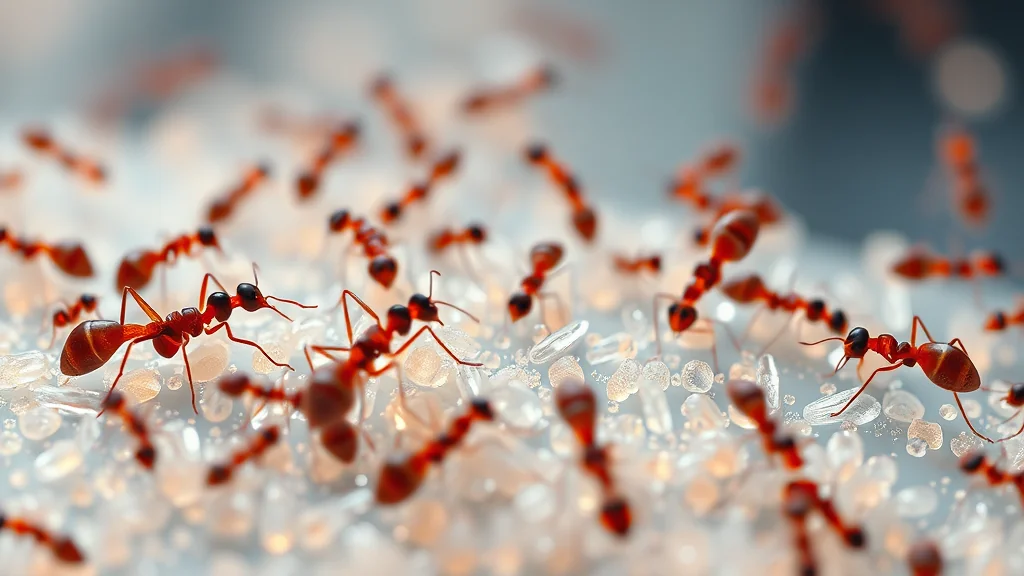
Why Ants Are Trending Globally: The Intricacies of Their Social Structures
In the realm of natural wonders, few insects capture the imagination quite like ants. These small yet mighty creatures have become a global sensation due to their complex social structures and recent scientific discoveries that continue to unravel the mysteries of ant behavior. With each new study, ants reveal more about themselves and challenge our understanding of society, cooperation, and evolution.
What Are Ants?
Ants are eusocial insects belonging to the order Hymenoptera and subfamily Formicinae. They live in colonies that can range from a few dozen individuals to millions, depending on the species. Each colony is composed of different castes: queens (the reproductive females), workers (sterile female workers), males, and sometimes soldiers or reproductives. The queen's primary role is to lay eggs, while worker ants perform various tasks such as foraging, nest maintenance, brood care, and defense.
Why Are Ants Trending Now?
The recent surge in interest around ant behavior can be attributed to several factors:
- New Scientific Discoveries: Recent studies have shed light on previously unknown aspects of ant life. For instance, researchers are uncovering how ants communicate through chemical signals called pheromones and how these signals influence colony behavior.
- Applications in Technology and AI: The complexity of ant colonies has inspired algorithms used in robotics and computer science for solving complex problems like network routing or data clustering. Ant Colony Optimization (ACO) is a computational method that mimics the foraging behavior of ants to find optimal solutions.
- Cultural Impact: Books, documentaries, and social media posts about ant colonies have captured the public's interest, drawing attention to their remarkable capabilities and raising awareness about environmental issues like deforestation and climate change.
Key Details About Ants
Here are some fascinating facts that contribute to why ants are trending:
- Social Complexity: Ant colonies exhibit sophisticated social structures with division of labor, communication networks, and hierarchical organization. This complexity rivals or even surpasses many human societies.
- Mental Navigation Skills: Some ant species can navigate using celestial cues such as the sun's position and polarized light patterns to find their way back home.
- Problem Solving Abilities: Certain ants have demonstrated problem-solving skills, like finding shortcuts or avoiding obstacles, which suggests a form of intelligence not often associated with insects.
What Can We Expect Next?
The future promises even more intriguing revelations about ant behavior and their impact on various fields:
- Sustainability Insights: As researchers continue to study ants, they may uncover more ways these tiny creatures contribute to ecosystem health and sustainability.
- Advancements in AI and Robotics: The inspiration drawn from ant colonies could lead to breakthroughs in artificial intelligence and robotics, particularly in swarm intelligence and distributed computing systems.
- Cultural Awareness: With increased public interest, there will likely be more educational programs and media content focusing on the importance of ants and their role in our environment.